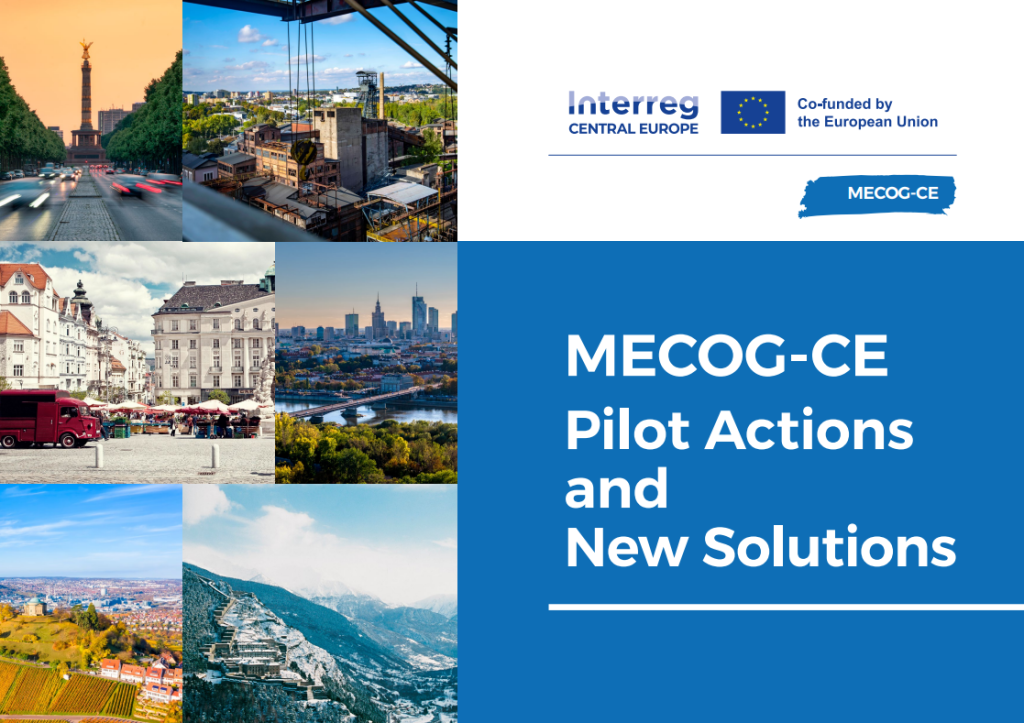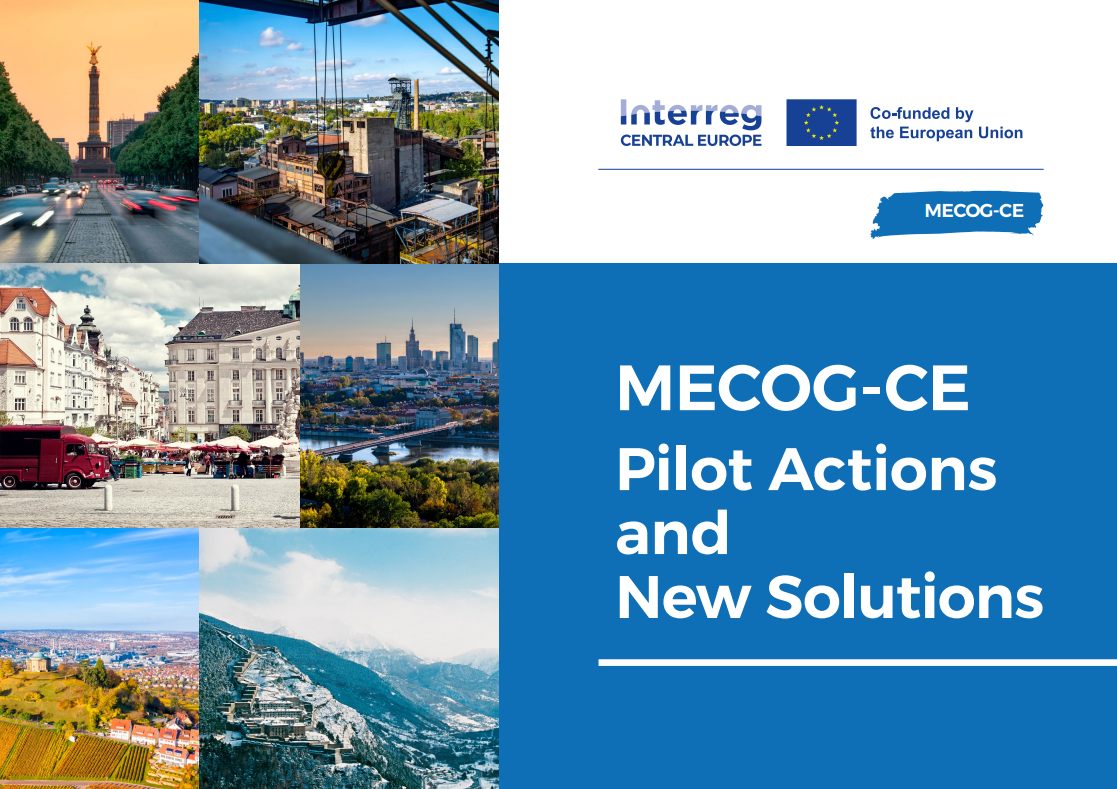
In many European countries, the metropolitan level is becoming key to addressing complex spatial, transport, social, and economic challenges. A prominent example of such work is the international project MECOG-CE (Strengthening Metropolitan Cooperation and Governance in Central Europe), implemented with the support of the Interreg CENTRAL EUROPE 2021–2027 program.
The project brought together several leading metropolises in Central Europe — Berlin-Brandenburg, Warsaw, Ostrava, Stuttgart, Brno, and Turin. Its main objective was not only to study best practices in metropolitan governance but also to practically test tools for cooperation between communities, sectors, and different levels of government.
Within the framework of MECOG-CE, the partners implemented five pilot actions, each addressing specific metropolitan challenges. These included:
- Berlin-Brandenburg: Informal and participatory approaches to forming a shared development vision.
- Ostrava and Stuttgart: Prototyping solutions for territorial transformation with citizen engagement.
- Brno: Development of inter-municipal food cooperation.
- Warsaw: Integration of public transport at the metropolitan level.
- Turin: Structured stakeholder dialogue during strategic planning.
The results of these pilots served as the basis for five “new solutions” — practical, replicable models that can be adapted by other metropolises. These include stakeholder engagement tools, transport cooperation platforms, joint planning mechanisms, and innovative metropolitan prototyping. All of them aim to reduce governance fragmentation, strengthen trust between communities, and foster shared metropolitan responsibility.
The MECOG-CE experience is particularly valuable for Ukraine in the context of forming agglomerations and functional urban areas. It demonstrates that an effective metropolis is not just an institution, but above all, a process of constant dialogue, cooperation, and mutual learning.
The Lviv Agglomeration is gradually implementing such approaches, adapting European experience to Ukrainian conditions.
You can learn more about the project’s findings here.